
Table Of Content
An HVAC maintenance checklist is a step-by-step list of the tasks a technician completes during a service visit: inspecting, cleaning, testing, and recording the condition of heating, ventilation, and air conditioning equipment. It makes sure nothing is skipped, gives every technician the same process, and leaves a record of what was found and done.
This guide covers the full checklist we recommend for split units, package units, AHUs, FCUs, and similar equipment, the readings worth recording, how often to do each check, and what changes in hot, dusty climates.
[DOWNLOAD BUTTON] Download the free printable checklist (PDF)
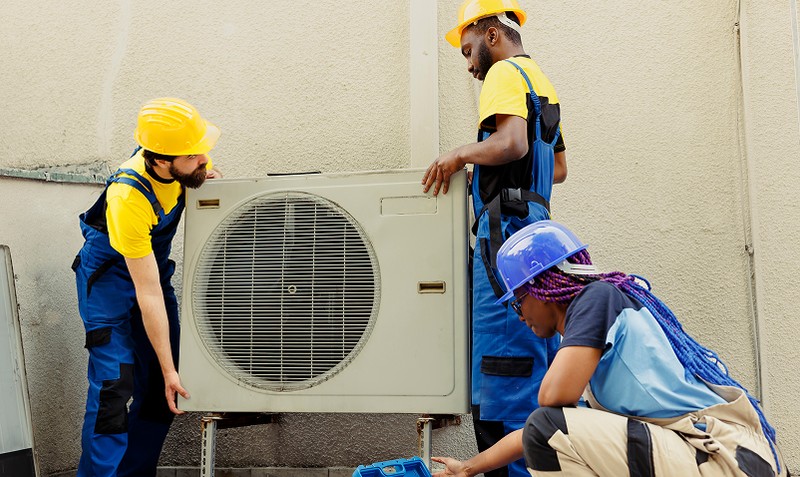
A checklist turns a service visit from memory into a process. That matters for a few reasons:
Work through the sections in order. For each task, record whether it's OK, needs attention, or doesn't apply, and add a note where something needs follow-up.
Never rely on the thermostat being off. Isolate the power at the disconnect and confirm it's dead before touching electrical components.
A dirty filter is the most common cause of poor cooling and frozen coils. A blocked condensate line is the most common cause of water leaks inside the building.
The condenser rejects heat from the building. If its coil is clogged or airflow around it is blocked, the compressor works harder, uses more power, and wears out faster.
Refrigerant work is regulated in most countries. Only certified technicians should connect gauges or add or recover refrigerant.
Readings turn "it seems fine" into evidence. Record them before and after the service so you can see what the work changed.
| Reading | Unit | Why it matters |
|---|---|---|
| Outdoor ambient temperature | °C / °F | Gives context for every other reading |
| Return air temperature | °C / °F | Air entering the indoor unit |
| Supply air temperature | °C / °F | Air leaving the indoor unit |
| Temperature difference (return minus supply) | °C / °F | A quick check of cooling performance |
| Suction and discharge pressure | psi / bar | Indicates refrigerant charge and system health |
| Supply voltage | V | Low or unstable voltage damages compressors |
| Compressor and fan motor current | A | High current points to strain or a failing component |
| Capacitor, rated and measured | µF | A capacitor reading below its rating is a common cause of failed starts |
[TECH REVIEW: add the typical temperature difference range for a correctly working system, and when a reading should be treated as a problem.]
Correct pressures depend on the refrigerant, the equipment, and the day's conditions, so always compare readings with the manufacturer's specifications for that unit.
The right frequency depends on the equipment, how many hours it runs, and the site. As a general guide:
| Frequency | Typical checks |
|---|---|
| Monthly | Filters, thermostat, airflow and the visible condition of the equipment |
| Quarterly | Coils, drainage, electrical connections and controls |
| Every six months | A deeper component inspection and system performance checks |
| Annually | A full inspection, cleaning, testing and a review of the service history |
The manufacturer's schedule always takes priority, and many maintenance contracts specify their own visit frequency.
Most maintenance guides assume a mild climate where cooling runs for a few months a year. In the Gulf, the Middle East, and other hot regions, the conditions are very different, and the checklist needs to account for them.
The tasks are the same for commercial equipment, but the scale changes the job. A commercial site may have dozens of AHUs, FCUs, chillers, or package units, each on its own schedule, often under an annual maintenance contract (AMC) or a planned preventive maintenance (PPM) plan.
For commercial work, make sure each checklist also records:
The full checklist is available in two versions.
Free printable PDF. Three pages covering every section above, with space for readings, parts used, findings, and signatures. No sign-up needed.
[DOWNLOAD BUTTON] Download the free PDF
Editable Excel template. Add your company logo and details, use drop-downs for each task, and let the temperature difference and visit summary calculate themselves. Print-ready on A4 or Letter.
[FORM BUTTON] Get the editable Excel version
Paper checklists work, but they have limits once a team grows. Sheets go missing, photos sit in technicians' phones, readings never reach the office, and the service report gets typed up days later.
With Zentid, the same checklist runs on the technician's phone as part of the job. Technicians tick off each task, enter readings, add photos, and capture the customer's signature on site, and they can't skip mandatory items. When the job closes, the service report is ready, and the office can see every visit and finding without chasing anyone.
Start a 7-day free trial or book a demo to see your checklist running in Zentid.
FAQ
A complete HVAC maintenance checklist covers safety and preparation, the indoor unit (filter, evaporator coil, blower, drainage, airflow), the outdoor unit (condenser coil, fan, clearance), the refrigerant system, electrical components and controls, readings such as temperatures, pressures, voltage and current, and final checks before the technician leaves.
Follow the manufacturer's schedule first. As a general guide, filters and airflow are checked monthly, coils, drainage and electrical connections quarterly, and a full inspection is done once a year. Systems that run most of the year, or in dusty or very hot conditions, usually need more frequent checks.
The technician checks and cleans the filter and coils, inspects the fans, motors and drainage, checks for refrigerant leaks, inspects wiring, capacitors and contactors, tests the controls, records operating readings, and confirms the system is performing correctly before finishing.
An inspection checks the condition and performance of the system to find problems. Maintenance is the work that keeps it running: cleaning, adjusting, replacing and servicing components. Most preventive maintenance visits include both.
It's a rule of thumb for deciding whether to repair or replace a unit. Multiply the age of the unit in years by the repair cost. If the result is more than $5,000, replacement is usually the better value; if it's less, repair it. It's a guide only: efficiency, refrigerant type, warranty and the overall condition of the system matter too.
Yes. The same tasks apply to split units, package units, AHUs, FCUs and similar commercial equipment. Adapt it to the specific equipment and the manufacturer's requirements, and record readings and findings for each unit separately.
Record the equipment serviced, the tasks completed, readings before and after, parts and materials used, photos of findings, any issues and recommendations, and the customer's acknowledgement or signature. Together these build a service history for each unit.
Yes. You can download our printable HVAC maintenance checklist as a free PDF above, with no sign-up. An editable Excel version, where you can add your own logo, is also available.
Everything you need to know about Zentid. Can't find the answer you're looking for? Feel free to contact us
Explore industry trends and valuable insights to keep you informed and stay ahead of the competition.





 Inventory
 Assets
 Contracts
 Projects
 Fleet
 Service Portal
 FieldFinance
 HR & Culture
 WhatsApp FSM
 Employee/Technician Tracking
 GPS Attendance
 Work Order Management
 Quotations
 Service Dispatch
 Overtime tracking software